
“Discipline and Order”: Double Colonisation of the Javanese Community in New Caledonia
Yael Pfeuty-Sotirio
09/15/2026
Abstract
Who are the Indonesians of New Caledonia? One may assume some tourists who planned a longer stay. Yet the history of the Indonesian community in New Caledonia dates back to the late 19th Century. From the island of Java in 1896 to their attempt to integrate into the Caledonian “melting pot,” the Javanese community has undergone a double colonisation. This paper argues that this double colonisation, presented as “discipline and order” by the Javanese themselves, is the root of an everlasting mutism, generational divide and internalised wounds among the Javanese community. Through the reality of colonisation, modern slavery and assimilation, I aim at presenting evidence of a fragment of the “victims of history” buried in the Caledonian migration past.
Introduction
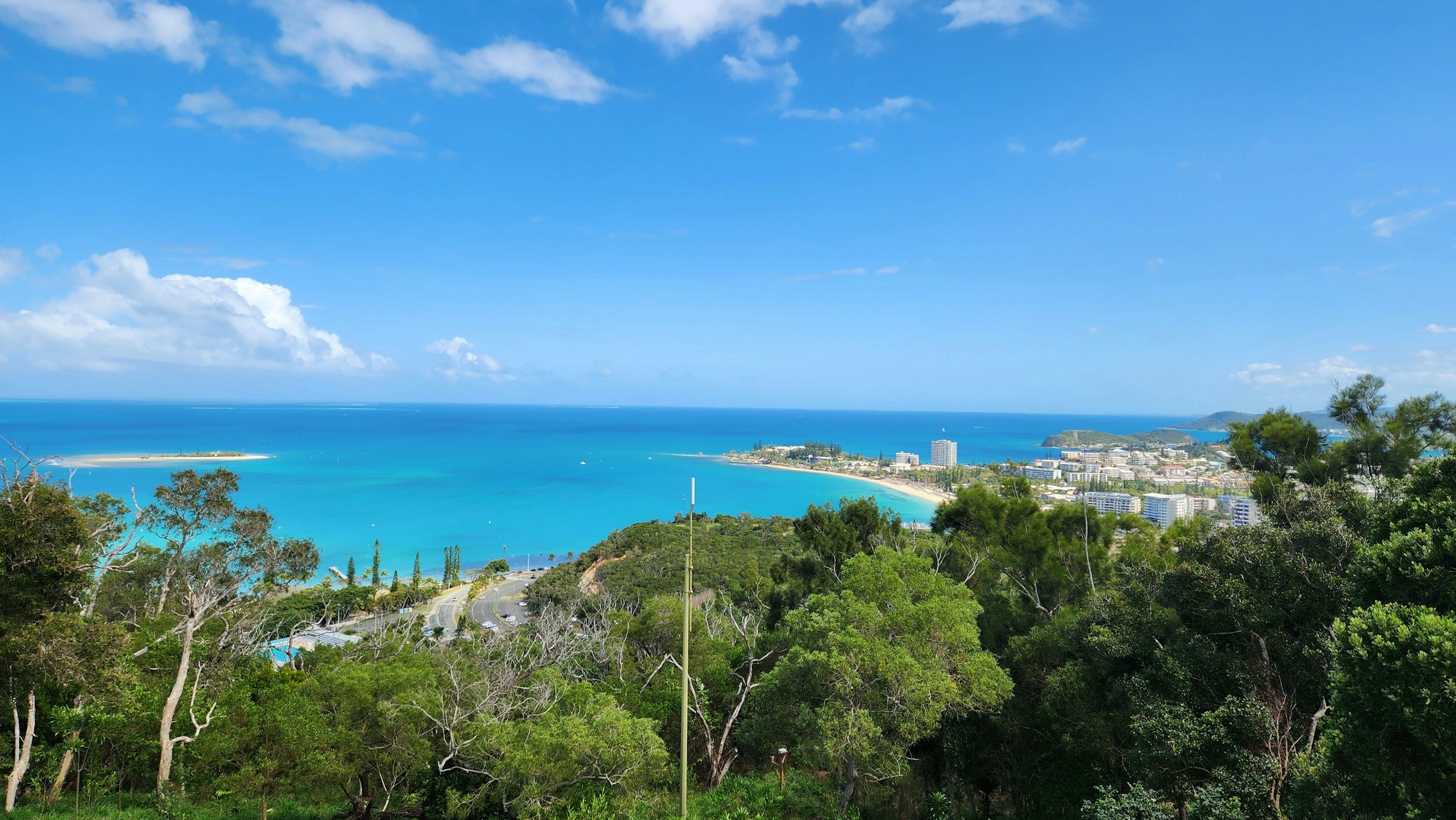
On February 15 2026, the Baie de l’Orphelinat witnessed the 130th anniversary of the presence of the Javanese community in New Caledonia since their first arrival in 1896. The commemoration, held by the Indonesian Association of New Caledonia (IANC) in the presence of the General Consul of the Republic of Indonesia in Noumea, Bambang Gunawan, was the opportunity to shed light on the history of Indonesians in New Caledonia (Gouvernement de la Nouvelle-Calédonie, 2026). Indeed, how did Indonesians reach New Caledonia at that time, and how is it that they are still a culturally active community? The answer lies in a history of labour migration and colonisation, tainted with an everlasting mutism that makes it hard to inquire about this past. The history of the Javanese in New Caledonia is a result of double colonisation, later translated into resilience, forced assimilation and silence across generations.
Indentured Labour as a Double Colonisation
The origins of this migration can be traced back to the early 1830s in Java under the governance of Holland through the colonial administration of the Eastern Indies. The Cultuurstelsel—system of cultures—was adopted for extractive purposes, and sugar cane was cultivated all over the island, leaving only 60% for people to live in a density of 200 people per square metre in impoverished conditions. This demographic pressure pushed many Javanese to emigrate overseas upon the proposal of indentured labour concluded between imperial powers. In reality, disillusioned Javanese emigrated from one environment of alienation to another (Maurer, 2002).
In the meantime, France had established colonies, conquering Kanak lands through force in 1853 and setting New Caledonia as a penal colony until 1897. Nevertheless, in the terrible words of the new colonial administrator Paul Feillet, “dirty tap water has flown enough (...) I am body and soul for the clean tap water” (O’Reilly, 1953). In his thinking, New Caledonia was a “colony without colonisers” lacking colonial administration and labour force (Maurer, 2002; Allen, 2010). The Kanak, on the demographic decline—due to imported diseases and resistance wars—were relegated to “reserve” areas. Labour demand in New Caledonia met labour supply in Java and thereafter, a contract was concluded between the East Indies colonial administration and the Consulate of France in Batavia—the colonial name of Jakarta (Maurer, 2002). Colonialism was a mercantilist rivalry when it came to resources, but a full cooperation when it came to trading the colonised.
These indentured labour 5-year-renewable contracts, guaranteed better salaries and improved conditions in New Caledonia, and “convinced” 170 Javanese to land on the 15th February 1896 in the Baie de l’Orphelinat (Allen, 2010). Instead, it was a complete disillusion: Javanese people became subject to the Code de l’Indigénat, and similar to the indigenous Kanak people, were deprived of the right to property, as well as political and civil rights (Le Petit Journal, 2023). Thereby, as labourers, the colonial administration had access to information regarding their wages, day-offs declarations, housing, clothing and food.
On the ground, Javanese labourers were the guinea pigs for early modern slavery: they worked under severe conditions notably in the nickel sector, monopolised by the Société Le Nickel (SLN) since 1884 (Maurer, 2002). A large number of Indonesians worked in the Tiebaghi mines in the North with the Japanese and the Vietnamese, valued for their “agility” (Allen, 2010). In that sector, Javanese wages were among the lowest in New Caledonia, collecting 12 to 15 francs per month for women and 15 to 25 for men. The average labourer earned seven francs per day. Javanese people also worked in the main fields of agriculture and coffee. The coffee and nickel booms of the 1930s pulled a new wave of Javanese to New Caledonia, while returns to Java were shaped by contract terms and worsening conditions at home (Maurer, 2002). Many Javanese families were split in this economic back and forth for decades, navigating oceans and colonial administrations in the search of a better life. This is notably the story told by Marcel Magi, member of the Indonesian Association of the North-West, and his great-father “Tamin, matricula 263” that married Javanese in New Caledonia to come back and forth to Java due to the economic situation and the nickel boom in the 1970s (Ville de Nouméa, 2021).
Despite double colonisation, modern slavery and economic hardship, the Javanese in New Caledonia never revolted. As an ethnic minority, they wished to integrate into the New Caledonian “melting pot,” without causing any trouble. Javanese labourers did not strike but instead conveyed a sense of “discipline and order,” being discreet but carrying a century-long burden on their shoulders (Maurer, 2002). In the words of Carl Mahossem, President of the IANC, “Why be discreet? It’s when the first Javanese arrived in Caledonia, they found themselves in a colonised country, while they fled their country that was colonised at that time as well, and when they discovered that they made themselves little, this is why this discretion has remained in us, it’s in our genes” (CALEDONIA, 2024).
Losing Identity through Forced Assimilation
The year 1946 ushered in a new era in the dynamics of the Javanese community in New Caledonia. The formal end of the Code de l’Indigénat and indentured labour contracts granted free residence for those who wanted to stay. In the meantime, it coordinated convoys back to Java for those who wanted to leave. The trauma left by the conditions of indentured labour pushed a large part of the community to return to Indonesia. Between 1896 and 1949, almost 20,000 Javanese came to New Caledonia and 15,000 went back: by the 2000s the remaining 5,000 constituted 2.5% of the New Caledonian people and the fifth largest ethnic community on the territory (Maurer, 2002). Now that they were not bound by contracts anymore, the Javanese community started working in other sectors, such as transportation and public administration and developed their “expertise” seen as valuable by the other communities in the nickel and coffee sectors. Since they were authorised to be owners, few bought properties in brousse such as Sadi and Sukati Barri, who bought a 13-acre coffee trees area in the border of Nera in the North (Ville de Nouméa, 2021).
Nevertheless, a large proportion decided to move to the Greater Noumea area—thus concentrating 82.6% of the Javanese community—with the desire to integrate into the 1960s colonial society (Maurer, 2002). This integration reflects precisely the long-lasting pain and the generational divide among the Javanese community in New Caledonia. In the name of French assimilationism, integration equated acculturation, and accelerated mutism of the Javanese community.
The laws of 1973 decreed that children born from Indonesian descent in New Caledonia received French nationality and only a minority decided to keep their Indonesian passport (Maurer, 2002). One after another, names were gallicised. As Dorian De lure describes: “as of the name of Kauman, it will disappear for Kesman when my grand-father will make it gallicised” (Ville de Nouméa, 2021). This is also the result of a lot of the miscegenation of the Javanese. As per culture, Marcel Magi says: “There is acculturation through miscegenation, which gives as a result that without being lost, we’re a bit drown in these traditions because there are some married with Europeans, other with Melanesians (Kanak), with Polynesians, Asian and we all have our cultures, our traditions” (CALEDONIA, 2024). The language of the uncles and aunties, mostly Javanese ngoko, is not spoken by the newer generations of niaouli—the tales say that Javanese mothers would have the habit to hang their babies on niaouli branches with a sarong (Allen, 2010). This is mainly because they aimed to melt into the Caledonian society and spoke French (Le Petit Journal, 2023). Although this language barrier does not prevent them from gathering as a community through associations such as the Persatuan Masyarakat Indonesia dan Keturunannya or IANC (1984), it is one of the roots of a generational divide in the Javanese community (Maurer, 2002).
Conclusion
The double colonisation of the Javanese people led to mutism, that of the occultation of the Javanese history in New Caledonia. Instead of revolting because of working conditions akin to modern slavery, the Javanese ethnic minority displayed “discipline and order,” bringing about generational divide and acculturation. Thus, many of the descending people know little about their history. Hopefully, this heritage is progressively uncovered in the archives. This led to some surprises such as the one expressed by Jean-Maurice Sotirio—from Javanese ascent on his father side, and Arab-Kanak on his mother side—when he realised that his grand-father was born in New Caledonia and not in Indonesia as he thought (Wea, 2023). The history of Javanese community is part of the history of New Caledonia: beyond the cleavages of Kanak, European colonisers, they are part of the “victims of history” in the words of Jean-Marie Tjibaou. They are part of the “other ethnies that are recognised as legitimate by the representatives of the Kanak people” in the words of the round table of Nainville-Les-Roches (Conseil de Gouvernement de la Nouvelle-Calédonie, 1983). Their identity is attached to this land and must be recognised and preserved in the making of a new social contract.
Edited by Lio-Young Park, Angelina Lanna Chams, Kaiyi Pan, Xian Kostyrko
References
Allen, P. (2010, November 20). Indonesians speaking French. Inside Indonesia: The Peoples and Cultures of Indonesia. https://www.insideindonesia.org/archive/articles/indonesians-speaking-french
CALEDONIA. (2024, December 8). WAGÉÉRI - La communauté indonésienne renforce ses liens. YouTube. https://www.youtube.com/watch?v=Ytkq6qaZChA
Conseil de Gouvernement de la Nouvelle-Calédonie. (1983). Déclaration commune du 12 juillet 1983 issue de la table ronde de Nainville-les-Roches [Information Report]. L'Indépendant. https://www.lindependant-knc.com/medias/files/decl-et-cr-nainville-les-roches-8-7-1983.pdf
Gouvernement de la Nouvelle-Calédonie. (2026, February 17). Facebook. Facebook.com. https://www.facebook.com/GouvNC/posts/C%C3%A9l%C3%A9bration-des-130-ans-de-la-pr%C3%A9sence-indonesienne-sur-le-territo/1313545904131812/
Le Petit Journal Jakarta. (2025, November 3). L’Histoire méconnue des Indonésiens de Nouvelle-Calédonie. lepetitjournal.com. https://lepetitjournal.com/jakarta/communaute/lhistoire-meconnue-des-indonesiens-de-nouvelle-caledonie-426231
Maurer, J.-L. (2002). Les Javanais de Nouvelle-Calédonie : des affres de l’exil aux aléas de l’intégration. Autrepart, n° 22(2), 67–90. https://doi.org/10.3917/autr.022.0067
O'Reilly, P. (1953). Paul Feillet, gouverneur de la Nouvelle-Calédonie (1894-1902). Revue d'histoire des colonies, 40(138), 216–248. https://doi.org/10.3406/outre.1953.1186
Ville de Nouméa (2021). 4 panneaux javanais BD. noumea.nc.https://www.noumea.nc/sites/default/files/lieux/maison-higginson/4-panneaux-javanais-bd.pdf
Wea, S. (2023). PORTRAIT. Découvrez le destin peu commun de Jean-Maurice Sotirio, en quête d’Histoire. Nouvelle-Calédonie La 1ère. https://la1ere.franceinfo.fr/nouvellecaledonie/province-sud/bourail/portrait-decouvrez-le-destin-peu-commun-de-jean-maurice-sotirio-en-quete-d-histoire-1438421.html