
Instrumentalized Migration at the Polish-Belarusian Border: Poland’s Security Strategy
Amelia Rahma Putri Aldrin
10/05/2026
Abstract
The Polish-Belarusian border has become the backdrop for the Polish migrant crisis since 2021. Poland has treated the alleged instrumentalization of migration by Belarus as a new method of hybrid warfare, and has responded to the threat by utilizing asylum restrictions, border militarization, and pushback enforcement. While strict migration policies and security-oriented measures may reduce crossings in the short term, they risk undermining the principle of non-refoulement, systematically endanger vulnerable migrants, and shifts pressure toward neighboring states (e.g. Lithuania and Latvia).
Introduction
The Polish migrant crisis has lasted for half a decade, caused by a significant number of asylum seekers originating from Belarus at the Polish-Belarusian border. Since as early as July 2021, Belarusian authorities have allegedly been “instrumentalizing” migrants to disrupt stability in Poland by exploiting the influx of migrants at the Polish border. Instrumentalization is defined in the EU’s Regulation 2024/1359 on Crisis and Force Majeure as a crisis in which a third country or hostile non-state actor encourages or facilitates the movement of migrants to the border of a MS in order to disrupt the stability of the EU collectively or its MS individually, thereby threatening the maintenance of public order or the protection of national security (Article 1(4)(b)) (European Parliament and Council of the European Union, 2024). Instrumentalized migration is an issue often presented as the facilitation of migration movements by a third country as a tactic of hybrid warfare, which is as a contemporary form of warfare where conventional tactics are combined with irregular non-military strategies (Nurlybayeva, 2025).
While Belarus denies all claims of involvement in the migrant influx by the EU border, it is widely perceived to be an act of retaliation against the EU for the latter’s imposition of sanctions after the fraudulent results of Minsk’s 2020 presidential election (The Lancet, 2021). The European Commission and EU leaders accused the President of Belarus, Aleksandr Lukashenka, of deliberately coordinating the trafficking of migrants to the Polish-Belarusian border. Evidence shows that Belarusian officials have organized mass crossings of migrants at the border; in November 2024 alone, there were approximately 110,595 documented attempts at illegal crossings at the Polish-Belarusian border (Mikołajczyk, 2025).
Following recent development, the Polish Ministry of the Interior and Administration has asserted that the number of attempted crossings by illegal migrants from the Polish-Belarusian border has dropped by 98 percent, from an estimated 15,500 in the first half of 2025 to just under 250 this year (Tilles, 2026). The ministry claims a 100 percent rate in apprehending the remaining migrants who have managed to cross illegally. This issue brief aims to analyze how Polish authorities have responded to migratory pressure at the Polish-Belarusian border as well as the legal and humanitarian implications of Poland’s response.
Understanding the Polish Solution
In the beginning, Poland had declared a state of emergency on its border with Belarus which banned large gatherings and limited movement in areas along the border, as well as the deployment of up to 20,000 Polish military personnel to the border zone (Mills et al., 2021; Tondo, 2021). Reports have shown that migrants had been continuously pushed back to Belarus by Polish border guards despite pleading for asylum. Humanitarian organizations such as Human Rights Watch and Amnesty International have warned that Polish pushback practices violated the right to asylum under EU law, specifically the charter of fundamental rights. However, Poland has only doubled down on its security-oriented measures toward the crisis in the coming years.
In March 2025, Polish Prime Minister Donald Tusk began enforcing legal restriction by signing a decree introducing a 60-day limit for international protection applications at the border in the event of alleged instrumentalized migration (Amnesty International, 2025). This act allows the Polish Council of Ministers to temporarily and regionally suspend the right to apply for international protection, which remains active till present day. Concerningly, this has allowed for Border Guard authorities to refuse all applications for international protection, even from migrants applying far from the Polish‑Belarusian border, such as the Border Guard posts in Warsaw or Szczecin (We Are Monitoring, 2026). Between March 2025 to mid-August this year, 492 asylum applications were rejected by Polish authorities (Kliszcz, 2026).
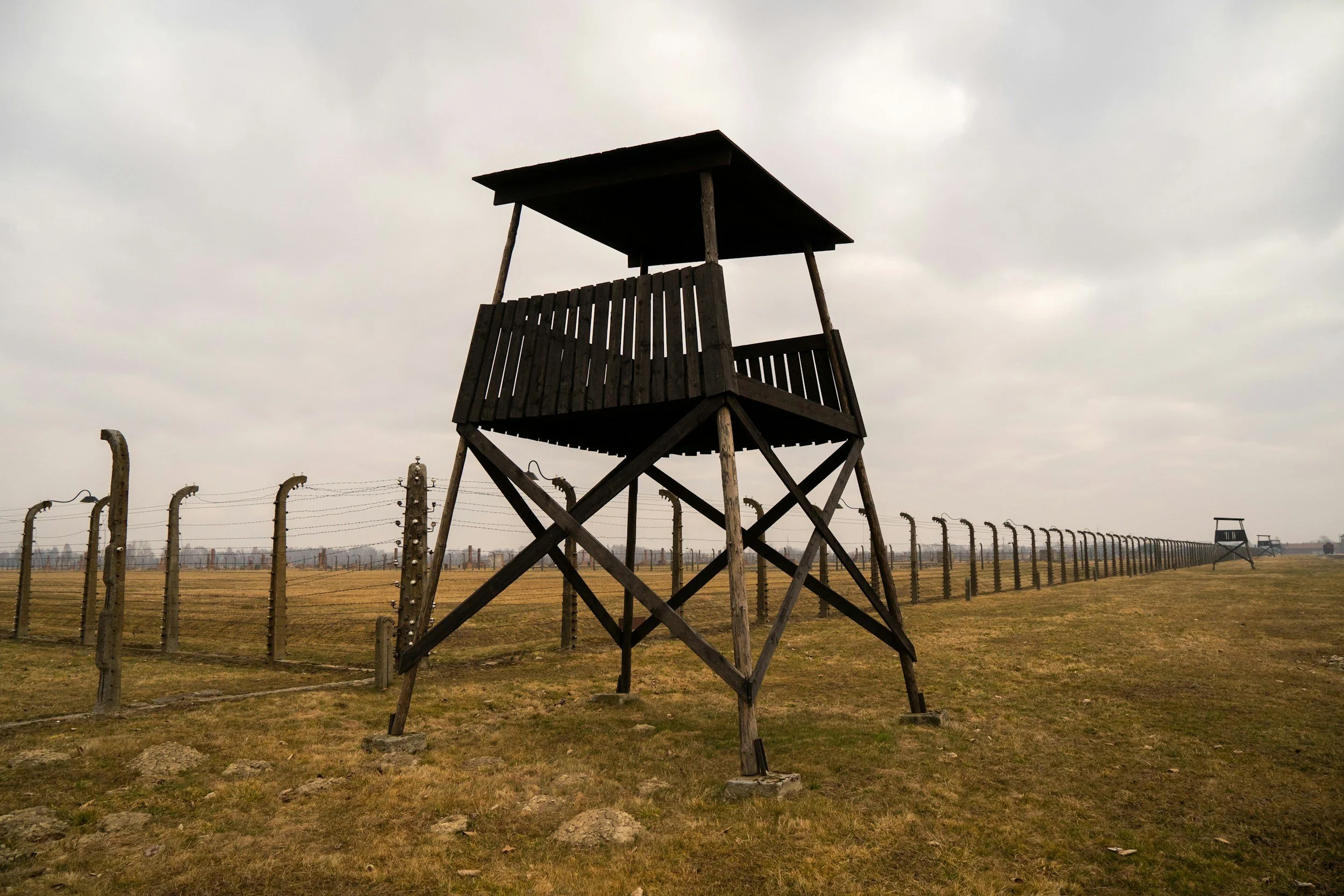
Poland has also opted for a form of physical deterrence through the construction of a 115-mile (186 km) fence, spending 3 billion złoty (€690 million) for the project with additional upgrades including a 5.5-meter-high steel fence, an electronic surveillance system, and electronic monitoring barrier (Kliszcz, 2026; Rankin, 2025). Although the fences have been primarily erected to counter irregular immigration, these physical barriers also serve to counter military and hybrid threats. As a result, the border has become a militarized zone filled with anti-tank barriers, fortifications, ditches and other defenses to guard against aggression. In addition, an exclusion zone has been designated around the border, which bars non-residents, including journalists and NGO workers, from entering the border crossing zones.
Poland’s last approach is pushback enforcement. Data released by the Polish Border Guard under the Public Information Access procedure documented 14,754 pushbacks carried out by its officers in 2025. That same year, Poland’s frontier was estimated to be patrolled by over 6,000 soldiers, 2,200 border guards, and police officers (Rankin, 2025). Eyewitness accounts from media and NGOs describe Polish border guards’ actions as violent and negligent toward asylum seekers—most of them being Middle Eastern and African migrants desperately trying to escape crises in the Global South (We Are Monitoring, 2026; Rankin, 2025; Reuters, 2025).
Legal and Humanitarian Implications
The “Polish Solution” has normalized the practice of refoulement, and has been criticized as a contravention to international law. Polish law stipulates the temporary restriction for asylum application in cases of instrumentalization because it poses a “serious and real threat to the security of the state or society” and is “essential” to eliminate threats (Amnesty International, 2025). These practices frequently violate the international legal principle of non-refoulement, which prohibits a country from returning asylum seekers or refugees to a territory where they face persecution, violence, or poor treatment and living conditions as an extension of a person's right to leave their own country (Jeanty, 2022).
Within the scope of EU law, there are several fundamental right safeguards when taking measures targeting instrumentalised migrants or refugees. Articles in the EU Charter of Fundamental Rights (CFR) demand proportionate use of force, prohibit mistreatment and violent acts, prevent collective expulsion, and demand respect toward the principle of non-refoulement (EUAA, 2026). However, NGO reports documented at least 400 people experiencing violence perpetrated by the Polish authorities in 2025, many of which are exposed to immediate pushbacks to Belarus without individual assessments (We Are Monitoring, 2026; The Association for Legal Intervention, 2026). Various NGO reports, particularly from the Granica Group humanitarian aid coalition, have documented the excessive use of force by local authorities and poor material conditions around the border.
Additionally, high-security features are unbefitting on border fences people may be forced to cross in the absence of alternatives to seek safety, and poses obstacles to life-saving assistance such as medicine, food, water to those stranded in between borders. Many migrant patients have been treated at the Belarus border for injuries caused by these razor wire fences. Borders should be required to be designed in a way that respects the essence of the right to asylum and does not disproportionately interfere with other fundamental rights, such as the right to physical integrity in Article 3 of the EU CFR (EUAA, 2026).
Closing
Poland's official policy is an example of an extreme solution to a migrant crisis, illustrating the conflict between national security and the right to asylum. While it solves the crisis at the Polish-Belarusian border, it fails to wholly resolve the crisis or mitigate its effects on EU borders—it deepens it by undermining international law (We Are Monitoring, 2026). This solution also encourages systemic violations of the rule of law, as Poland eagerly urges the prospect of an EU-wide approach when European Commission President Ursula Von der Leyen announced they would soon propose a new “European emergency response framework” for cases of “engineered and weaponized” mass migration (Ciobanu, 2026). Polish authorities celebrated the announcement as a sign that Europe was becoming interested in the “Polish Solution”, but following militaristic solutions does not guarantee the cessation of instrumentalized migration.
References:
Amnesty International. (2025, 1 May). Poland: Law “suspending” asylum claims is a flagrant violation of international law and poses a serious threat to the rights of refugees and migrants. https://www.amnesty.org/en/documents/eur37/9322/2025/en/
Beszłej, F. J. (2026, July 18). Poland reports sharp fall in border crossings. TVP World. Retrieved September 28, 2026, from https://tvpworld.com/94408817/poland-belarus-border-illegal-crossing-attempts-fall-98
Ciobanu, C. (2026, September 25). Poland halted asylum claims at the Belarus border and now wants Europe to follow its example. LA Times. Retrieved September 28, 2026, from https://www.latimes.com/world-nation/story/2026-09-25/poland-halted-asylum-claims-at-belarus-border-now-wants-europe-to-follow-its-example
EUAA. (2026, May 12). Belarus: New report highlights deteriorating human rights situation. https://www.euaa.europa.eu/news-events/belarus-new-report-highlights-deteriorating-human-rights-situation
European Parliament, & Council of the European Union. (2024, May 14). Regulation (EU) 2024/1359 of the European Parliament and of the Council of 14 May 2024 addressing situations of crisis and force majeure in the field of migration and asylum and amending Regulation (EU) 2021/1147 (32024R1359). Refworld. https://www.refworld.org/legal/reglegislation/council/2024/en/148015
Jeanty, N. (2022, January). How effective is the principle of non-refoulement in Europe today?. Generation for Rights Over the World (GROW) Think Tank. https://www.growthinktank.org/wp-content/uploads/2022/01/How-effective-is-the-principle-of-non-refoulement-in-Europe-today_.pdf
Mikołajczyk, B. (2025, 3 July). Polish law restricting the right to asylum at borders. Odysseus Network. https://www.eumigrationlawblog.eu/polish-law-restricting-the-right-to-asylum-at-borders
Mills, C., Fella, S., Loft, P., & Butchard, P. (2021). Belarus/EU migrant crisis. House of Commons Library. https://commonslibrary.parliament.uk/research-briefings/cbp-9389/
Rankin, J. (2025, February 4). 'They are people': asylum seekers caught up in 'hybrid war' at Poland-Belarus border. The Guardian. Retrieved February 26, 2026, from https://www.theguardian.com/world/2025/feb/04/they-are-people-asylum-seekers-caught-up-hybrid-war-poland-belarus-border
Reuters. (2025, December 12). Scores of migrants cross into Poland through hidden Belarus border tunnel. Retrieved February 26, 2026, from https://www.reuters.com/world/scores-migrants-cross-into-poland-through-hidden-belarus-border-tunnel-2025-12-12/
The Lancet. (2021, December 1). Humanitarian crisis at the Poland–Belarus border: politics is putting migrants at risk. The Lancet Regional Health – Europe, 11(100285). https://doi.org/10.1016/j.lanepe.2021.100285
Tondo, L. (2021, November 9). Migrants face ‘desperate situation’ at Poland-Belarus border | Global development. The Guardian. Retrieved September 28, 2026, from https://www.theguardian.com/global-development/2021/nov/09/unacceptable-migrants-face-desperate-situation-at-poland-belarus-border
We Are Monitoring. (2026). They did not let us speak. The “temporary” suspension of human rights at the Poland–Belarus border. https://wearemonitoring.org.pl/wp-content/uploads/2026/04/They-did-not-let-us-speak-WAM.pdf