
Japan-ASEAN Multi-Sectoral Diplomatic Strategy: A Holistic Approach to Asia-Pacific Challenges
Raphael Attali
08/22/2026
Introduction
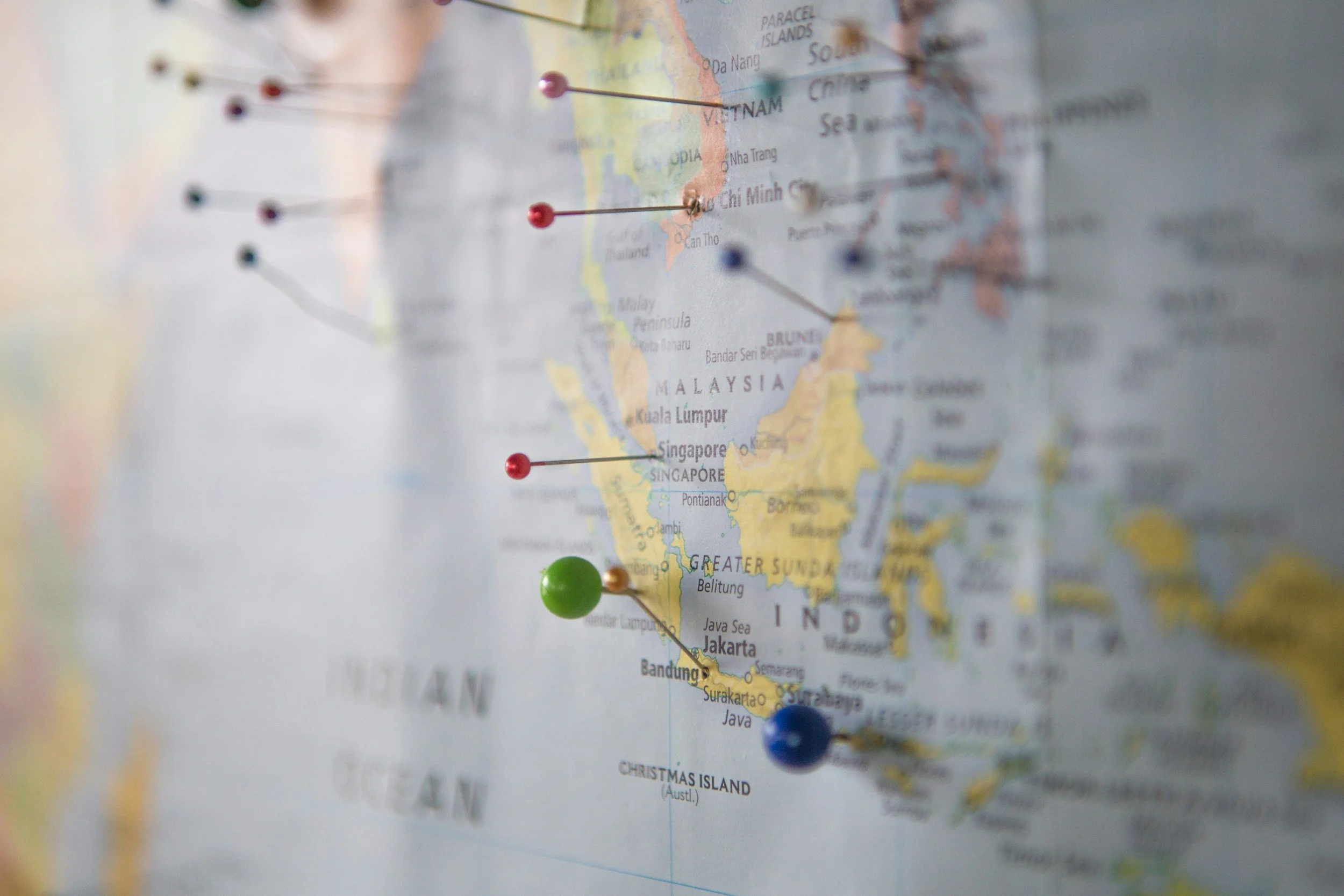
The Asia-Pacific region faces multifaceted security and economic challenges requiring a cross-sectoral diplomatic response (UNDP, 2023; Asia Pacific Foundation of Canada, 2025). To address regional uncertainties, Japan reinforced its ties with ASEAN at the 28th ASEAN-Japan Summit held on October 26, 2025, in Kuala Lumpur during Prime Minister Takaichi Sanae’s first official foreign visit (Ministry of Foreign Affairs of Japan, 2025). Amid intensifying China-Japan tensions (Johnson, 2025), this summit underscores Japan’s commitment to Southeast Asian stability. After identifying the key stakeholders in ASEAN-Japan diplomatic relationship (I), we will examine the strengthening of security (II), and economic and cultural (III) ties.
The Key Stakeholders of ASEAN-Japan diplomatic relations
The key players in these diplomatic relations are primarily Japan and the 11 member countries of ASEAN. Japan has maintained close ties with ASEAN for more than 50 years (since 1973, Ministry of Foreign Affairs of Japan, 2023) through the ASEAN-Japan “Friendship and Cooperation” initiative (Prime Minister’s Office of Japan, 2023). Moreover, actors outside this Japan-ASEAN relationship are also key stakeholders: first and foremost, the People’s Republic of China (PRC) and the United States of America (USA), which play a key role in the Asia-Pacific region, are particularly attentive to relations between Japan and ASEAN. Taiwan, given its global economic importance due to its semiconductor industry and its growing geopolitical role in this context (Liu, 2025), can also be considered a key stakeholder in these relations. Indeed, it was one of the topics of discussion at the Japan-ASEAN summit: “Peace and stability across the Taiwan Strait are important issues, which directly impact regional security.” (Ministry of Foreign Affairs of Japan, 2025).
ASEAN-Japan Security Cooperation: Maritime and Cyber Challenges
In the context of growing tensions in the Asia-Pacific region (Johnson, 2025), this diplomatic relationship between Japan and ASEAN is consolidated through security cooperation (Ministry of Foreign Affairs of Japan, 2025). There are numerous and multifaceted threats to maritime security in the Asia-Pacific region (ranging from “inter-state maritime disputes” to “illegal fishing”, and many others) and are also coupled with threats caused by climate change (Mizo, Hauger, 2025). In this context, “Japan advocates for a ‘Free and Open Indo-Pacific (FOIP)’ and consistently supports the ‘ASEAN Outlook on the Indo-Pacific (AOIP),’ which shares fundamental principles with FOIP” (Ministry of Foreign Affairs of Japan, 2025). Maritime security stands as a central pillar of Japan-ASEAN relations, as illustrated by Japan’s co-organization of a maritime cooperation conference with Indonesia in 2024 (Japanese Ministry of Defense, 2024). At the 28th ASEAN-Japan summit in Kuala Lumpur, Japan also reiterated its regular investment in several ASEAN countries through Official Security Assistance. It also stated that it could “expand it to other ASEAN countries and vigorously promote cooperation in areas such as disaster response, in addition to maritime security.” (Ministry of Foreign Affairs of Japan, 2025). Beyond maritime security, Japan has sought to strengthen security cooperation ties with ASEAN in the field of cybersecurity during the summit: “We will also strengthen our efforts through initiatives such as the ASEAN-Japan Cybersecurity Policy Meeting and the ASEAN-Japan Cybersecurity Capacity Building Centre (AJCCBC), along with cooperation to combat transnational crimes, including organized fraud.” (Ministry of Foreign Affairs of Japan, 2025)
Strengthening ASEAN-Japan Economic and Cultural Relations
Japanese economy faces some uncertainties (Iizuka, 2026), that’s why Japanese diplomacy with ASEAN also includes an economic dimension. Japan wants to develop its economic diplomacy with ASEAN through a commitment to cooperation that was expressed at the summit. The Japanese delegation proposed launching the “Japan-ASEAN Co-creation Initiative for Artificial Intelligence (AI)” (Ministry of Foreign Affairs of Japan, 2025). In addition to AI, Japan intends to develop its economic partnerships in many sectors, particularly “decarbonization, sustainable agriculture, forestry, and fisheries” (Ministry of Foreign Affairs of Japan, 2025) and finance (Ministry of Finance of Japan, 2025). Beyond economic diplomacy, Japan is also focusing on cultural diplomacy. At the summit, the Japanese delegation emphasized its desire to develop cultural and intellectual exchanges, particularly through the NIHONGO Partners initiative, a program aimed at promoting Japanese language in secondary schools in Asia (The Japan Foundation, 2026). Japan also plans to develop the Japan-East Asia Network of Exchange for Students and Youths (JENESYS) to promote intercultural exchanges in the Asia-Pacific region (Ministry of Foreign Affairs of Japan, 2025).
Conclusion
In conclusion, it is clear that there are many challenges and uncertainties in the Asia-Pacific region. There are security challenges related to regional tensions, maritime security, and cybersecurity. There are also economic challenges, such as US tariffs and the decline in the value of the yen. To respond to these regional multifaceted challenges, Japan is strengthening its diplomatic ties with ASEAN and developing a multisectoral diplomatic strategy based on three pillars: security, economy, and culture. The evolution of this diplomatic relationship between Japan and ASEAN will therefore be crucial to understanding the dynamics at play in the Asia-Pacific region.
References:
Asia Pacific Foundation of Canada. (2025). Indo-Pacific outlook 2025. https://www.asiapacific.ca/publication/indo-pacific-outlook-2025
ASEAN Secretariat. (2025). ASEAN member states. https://asean.org/member-states/
Iizuka, S. (2026). Japan GDP likely to fall behind India in 2026, hit by weak yen. Japan Today. https://japantoday.com/category/business/focus-japan-gdp-to-fall-behind-india-in-2026-hit-by-weak-yen-tourism-slowdown
Japanese Ministry of Defense. (2024). Overview of the maritime cooperation and connectivity conference co-hosted by Indonesia and Japan. https://www.mod.go.jp/en/article/2024/12/7ff4b8c2a5da26e08a8c044200340deee40f739b.html
Johnson, J. (2025). Dangerous new equilibrium awaits Japan-China ties in 2026. The Japan Times. https://www.japantimes.co.jp/news/2025/12/31/japan/politics/japan-china-relations-2026-analysis/
Liu, R. C. et al. (2025). From vulnerabilities to resilience: Taiwan's semiconductor industry and geopolitical challenges. Telecommunications Policy, 49 https://ideas.repec.org/a/eee/telpol/v49y2025i4s0308596125000485.html
Ministry of Finance of Japan. (2025, May 4). The ASEAN+3 Finance Ministers and Central Bank Governors' Meeting. https://www.mof.go.jp/english/policy/international_policy/convention/asean_plus_3/20250504.html
Ministry of Foreign Affairs of Japan. (2023). The 50th year of ASEAN-Japan friendship and cooperation. https://www.mofa.go.jp/policy/oda/page22e_001032.html
Ministry of Foreign Affairs of Japan. (2025). The 28th ASEAN-Japan Summit. https://www.mofa.go.jp/a_o/rp/pageite_000001_00004.html
Mizo, R., & Hauger, J. S. (2025). Climate change and maritime security: Challenges and prospects for cooperation for the Quad. Asia-Pacific Journal, 23, e19. https://www.researchgate.net/publication/397458710_Climate_Change_and_Maritime_Security_Challenges_and_Prospects_for_Cooperation_for_the_Quad
Prime Minister's Office of Japan. (2023). 50th year of ASEAN-Japan friendship and cooperation. https://japan.kantei.go.jp/ongoingtopics/asean_en/index.html
The Japan Foundation. (2026). About the NIHONGO Partners Program. https://asiawa.jpf.go.jp/en/partners/
UNDP Regional Bureau for Asia and the Pacific. (2023, May). Anticipating risks and uncertainties for Asia and the Pacific: 2023 updated key risks report. United Nations Development Programme. https://www.undp.org/publications/anticipating-risks-and-uncertainties-asia-and-pacific-2023-updated-key-risks-report-0