
America’s Sustainable Strategy in Pakistan’s Green Energy Transition
Javeria Abbas
04/11/2026
Introduction
Pakistan’s energy landscape has been dominated by imported fossil fuels and unsustainable coal-backed power systems. This operating system has exacerbated Pakistan’s environmental and economic issues by making the country extremely vulnerable to climate change and disruptions in global supply chains. Recognizing the vulnerability and dependence of these traditional power systems, the Government of Pakistan has pledged to raise the share of renewable energy sources in the energy grid to 40% by 2025 and 60% by 2030 (Energy Update, 2025). For this, Pakistan requires finance ($101 billion), technology transfer, and capacity building, and this is where the United States (US) steps in as a reliable partner in Pakistan's energy frameworks. The US has been facilitating Pakistan’s just transition to sustainable energy sovereignty by supporting and subsidizing development projects, including dam modernization, solar grants, wind energy corridors, and grid modernization. However, this involvement in Pakistan’s energy sector extends beyond developmental purposes to the US’s strategic goals in the region, including the Indo-Pacific strategy and containment policies amid growing tensions with China.
Pakistan’s Energy Landscape: Sustainability vs. Entrapment
Pakistan, despite its great potential to harness renewable energy at home, is gridlocked in energy dependencies that pose significant challenges to the country's energy security. Pakistan’s energy architecture represents a stark choice between the US-led sustainable and resilient energy systems and China’s CPEC (China-Pakistan Economic Corridor) entrapment through coal-heavy, unsustainable debt and overcapacity. Pre-CPEC Pakistan suffered from immense energy shortages of about 5,500MW, which adversely affected the national economy. As circular debt soared to Rs. 600 billion, fuel shortages became frequent, leading to idling of several power plants and a significant decline in industrial production (Kiani, 2022). China’s CPEC rescued Pakistan at that critical moment but has left present-day Pakistan entrapped in debt fueled overcapacity, inflated tariffs, and energy dependencies. While Chinese Independent Power Producers (IPPs) prioritize fossil-heavy infrastructure, leaving Pakistan unable to explore its clean energy potential, US aid emphasizes green tech and resilience via the Green Alliance partnership. In Pakistan’s power sector, Beijing laid the groundwork for costly overcapacity, while Washington is bridging that coal-backed power system to a cleaner, sustainable future (Maqsood, 2024).
A well-structured transition to renewable energy, driven by the principles of Just Transition, can provide several advantages to Pakistan. Firstly, it can reduce Pakistan’s reliance on imported fossil fuels, thereby improving energy security. Secondly, renewable energy sources emit fewer greenhouse gases than non-renewable fossil fuels, contributing to climate mitigation. Thirdly, renewable energy projects can create jobs and stimulate economic growth in rural areas. Finally, Pakistan can use its extraordinary renewable energy potential to position itself within regional value chains in the energy-hungry South Asian region (Ahmed & Zeshan, 2024). US-Pakistan “Green Partnerships” can play a significant role in achieving this transition, with all its advantages.
US – Pakistan “Green Alliance” Partnership
The US – Pakistan “Green Alliance” partnership, introduced during the Energy Security Dialogue in Islamabad 2023, built on prior US clean energy pacts (e.g., 2015 partnership), fostered cooperation between the two to face climate, environmental, and economic needs through partnerships on renewable, sustainable, and clean energy. Given that Pakistan is the 4th most vulnerable country to climate change, the need to “phase out coal” and “phase in renewable energy” is a growing imperative (Radio Pakistan, 2023). The US and Pakistan have a long history of cooperation in sustainable energy and economic growth. For over 50 years, the US has invested in Pakistan’s power generation, including clean energy through hydro-power, which continues to benefit millions of Pakistanis today. Key projects under the United States Agency for International Development (USAID) include upgrading Mangla and Tarbela dams, opening wind energy corridors, facilitating solar projects, and introducing smart meters across Pakistan’s grid to reduce electricity losses. Under these projects, some major interventions were implemented in their respective areas, contributing to improved efficiency and increased access to renewable energy.
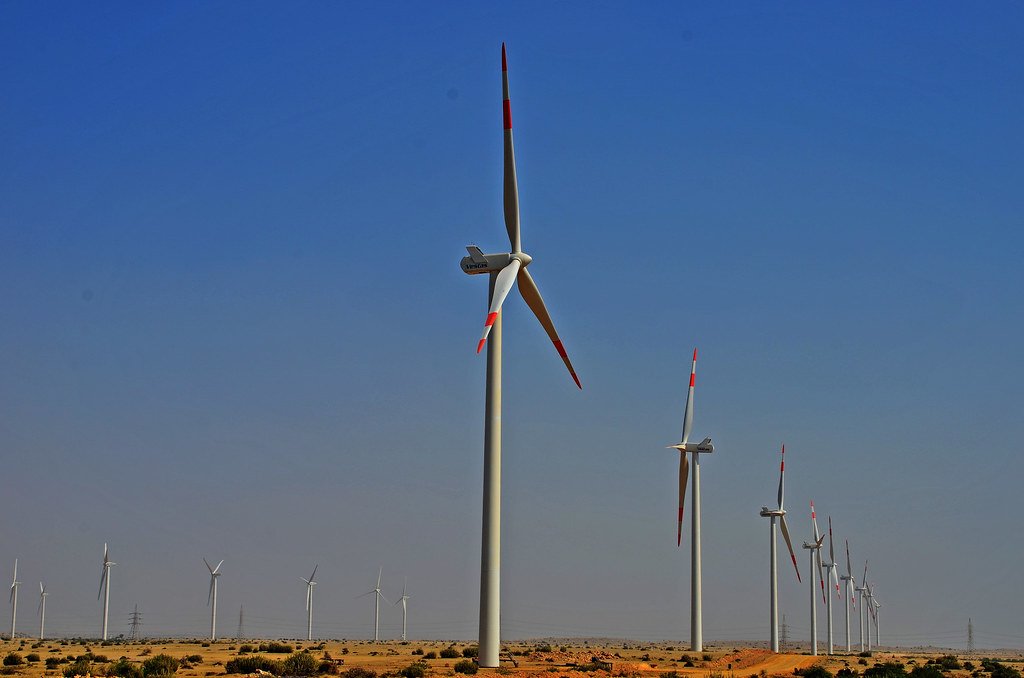
For instance, dam modernization enhanced efficiency to meet the country’s growing energy demands. At Tarbela dam, improvements to turbines and systems added 128 megawatts to the grid. Meanwhile, the improvements at Mangal dam reduced dependency on imported fossil fuels and extended its lifespan. Massive investments of approximately $43 million were made to establish wind power corridors, connecting local wind farms to the national grid, which added over 780 megawatts of wind energy and sparked private investment. In addition to the establishment of wind power corridors, solar projects, subsidized by loans from local banks were launched, providing clean energy and unlocking $2.5billion in private investment. Capacity building and training programs were launched in collaboration with the Ministry of Climate Change to strengthen local collaborations to manage renewable energy projects and sustain their benefits (Business Recorder, 2024)
While these initiatives were initially funded by USAID, the Trump’s 2.0 administration aid cuts pivoted these projects from USAID grants to State Department-led “Green Alliance” initiatives and private FDI, ensuring the sustainability of US clean energy stewardship in Pakistan. For example,
Upgrade of Tarbela and Mangla dam was mostly complete before USAID aid cuts, and is now being sustained via domestic financing;
installation of wind energy corridors and solar projects is being driven by private FDI, and support from State-Department Green Alliance;
the integration of smart meters into national grid systems is, however, now being implemented by Nepra with World Bank support.
Thus, key pre-2025 USAID milestones, such as Tarbela dam’s 128MW boost, extension in the lifespan of Mangla dam, $43M wind corridors, $2.5B FDI for solar projects, and smart meter pilots served to integrate US into Pakistan’s green energy architecture. Even though the aid sustaining these projects halted in 2025, private FDI and State Department Green Alliance are backing the push towards 60% of the energy sector using renewable sources by 2060, catalyzing Pakistan’s self-reliance (Profit Pakistan Today, 2026).
US’s Sustainable Strategy in Pakistan’s Power Sector
While the US has shown a commitment to supporting Pakistan’s efforts in the renewable energy transition, Washington’s strategic interests in the South Asian region have also dominated this approach, rather than it being a purely developmental or environmental concern. The US’s involvement in Pakistan’s energy sector aligns with its broader Indo-Pacific strategy, containment policies against China by reducing Pakistan’s reliance on the Chinese Belt and Road Initiative (BRI), and the promotion of US tech exports in clean energy in an energy-intensive region. It also helps counter China’s role as a regional hegemon by subsidizing alternatives such as dam modernization, wind energy corridors, eco-smart cities, and solar power projects.
Moreover, the US’s presence in Pakistan as a reliable energy partner opens the door to Islamabad’s critical mineral wealth, which has become increasingly important to Washington following China’s imposition of export controls on rare earths (New Lines Institute for Strategy and Policy, 2024). While Washington’s approach is sustainable, Beijing maintains a strong hold over energy systems in South Asia. At the same time, USAID aid cuts ($845M aid suspended in 2025) signal Trump’s protectionist and “America First” priorities, redirecting funds from foreign sustainable ventures to domestic fossil preferences (oil independence). US clean tech exports rely on private FDI, whereas Pakistan’s proclaimed “all-weather friend”, China, offers state backed mega-infrastructure with guaranteed FDI - a contradiction that's raising questions about scalability of Pakistan’s $101B green transition.
Pakistan is hedging expertly in this relatively uncertain environment. Relying on the US green alliance to gain tech support and legitimacy while leaning fully on China for immediate capacity, leaving no room for neither disruption nor dependency. This dual-track approach tends to pressure Washington to elevate Islamabad’s role in the Indo-Pacific beyond just counter-Beijing utility, and strengthen Pakistan’s stakes in US’s foreign policy and critical mineral strategy.
In order to compete with China’s influence and maintain its position as Pakistan’s indispensable green partner, the US must double down––transform cuts into catalytic FDI, scale $500M funds, accelerate tech transfer, and build strong clean energy alliances.
Self-sufficiency or Strategic Competition?
Pakistan’s renewable energy transition is riding two boats at once. On one hand, it aims to free the country from chronic energy dependency and make it self-sufficient. On the other hand, it is increasingly becoming a battleground for strategic competition between China and the United States, both of which are seeking dominance in the region. China has invested heavily in Pakistan’s connectivity infrastructure, developing roads and Gwadar port under its regional BRI, partly to reduce its vulnerability to the Malacca Dilemma. To fund infrastructure development, China subsidized unsustainable coal-fired power projects in Pakistan, introducing long-lasting energy dependencies in the already fragile power sector. However, a new layer of geopolitical contestation is emerging, as the US supports Pakistan’s shift towards clean energy. These clean-power systems, subsidized by Washington, may gradually weaken Beijing’s coal-based power partnership with Pakistan. Whether this strategic rivalry accelerates Pakistan’s transition towards renewable energy through competing investments or stalls progress amid geopolitical tensions will determine the country’s energy future in the coming years.
References
Blablová, V. (2025, March 13). Taiwan’s Approach Towards AI. CEIAS. https://ceias.eu/taiwans-approach-towards-ai/
Chang, B. A. (2019). Artificial Intelligence and US—China Relations. In N. D. Wright (Ed.), Artificial Intelligence, China, Russia, and the Global Order (pp. 115–118). Air University Press. http://www.jstor.org/stable/resrep19585.20
Deeks, A. (2020). Introduction to the symposium: How will artificial intelligence affect international law? AJIL Unbound, 114, 138–140. https://doi.org/10.1017/aju.2020.29
Department of Digital Strategy. (2025, March 24). Ministry of Digital Affairs unveils major initiatives to boost Taiwan’s AI industry and Global Competitiveness. Unveils Major Initiatives to Boost Taiwan’s AI Industry and Global Competitiveness. https://moda.gov.tw/en/press/press-releases/15428
Dixon, M. (2025, January 31). The DeepSeek doctrine: How Chinese AI could shape Taiwan’s future. – The Diplomat. https://thediplomat.com/2025/01/the-deepseek-doctrine-how-chinese-ai-could-shape-taiwans-future/
Goh, B. (2019, November 26). Taiwan-based AI firm Appier raises $80 million. https://www.reuters.com/article/technology/taiwan-based-ai-firm-appier-raises-80-million-idUSKBN1Y0008/
Lee, W.-Y. (2024, December 27). Taiwan’s Science Ministry warns spending cuts could hit chips, Ai Funding. Reuters. https://www.reuters.com/technology/taiwans-science-ministry-warns-spending-cuts-could-hit-chips-ai-funding-2024-12-27/
Meleouni, C., & Efthymiou, I. P. (2023). Artificial Intelligence and its impact in international relations. Journal of Politics and Ethics in New Technologies and AI, 2(1). https://doi.org/10.12681/jpentai.35803
National Science and Technology Council. (2018, October 16). Ai Innovation: Grand Strategy for a Small Country. Executive Yuan, R.O.C. (Taiwan). https://english.ey.gov.tw/News3/9E5540D592A5FECD/edadb735-e6a6-43e1-ac93-1959602bb3ec
National Science and Technology Council. (2019, August 7). AI Taiwan Action Plan. Executive Yuan, R.O.C. (Taiwan). https://english.ey.gov.tw/News3/9E5540D592A5FECD/1dec0902-e02a-49c6-870d-e77208481667
Ndzendze, B., & Marwala, T. (2023). Artificial Intelligence and international relations theories. Palgrave Macmillan.
Pauwels, E. (2019, April 29). Responsible Governance in the Era of AI Convergence (Eds.), The new geopolitics of converging risks: The UN and Prevention in the Era of AI (pp. 39–45). United Nations University New York
Pauwels, E. (2019, April 29). Prevention in the Era of AI Convergence (Eds.), The new geopolitics of converging risks: The UN and Prevention in the Era of AI (pp. 47–53). United Nations University New York
Reuters. (2023). Taiwan – Global AI Hub. Reuters. https://www.reuters.com/plus/taiwan-global-ai-hub
Reuters. (2025, February 3). Taiwan bans government departments from using DeepSeek AI. Reuters. https://www.reuters.com/technology/taiwan-bans-government-departments-using-deepseek-ai-2025-02-03/
Tseng, K.-Y. (2024, August 28). Taiwan’s AI governance framework unveiled. IAPP. https://iapp.org/news/a/taiwan-s-ai-governance-framework-unveiled
Ting, Y.-J., Huang, H., Lin, T.-L., & Chang, W.-H. (2023). Expanding governance capabilities. East Asian Policy, 15(02), 44–62. https://doi.org/10.1142/s1793930523000119
Wen, C.-H. R., & Chen, Y.-N. K. (2024, August 19). Understanding public perceptions of revolutionary technology: The role of political ideology, knowledge, and news consumption. JCOM. https://jcom.sissa.it/article/pubid/JCOM_2305_2024_A07/